
Freeman Tilden's six principles of interpretation (and why they still define great visitor experiences seventy years on)
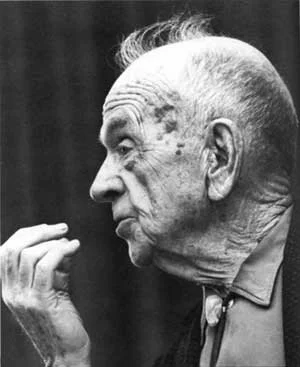
© US National Park Service
The six principles that still define great interpretation, seventy years on.
“Through interpretation, understanding; through understanding, appreciation; through appreciation, protection.”
Freeman Tilden wrote Interpreting Our Heritage in 1957, and everything he said still applies today.
Freeman Tilden never used a touchscreen. He never briefed an AV producer or reviewed a content management system. He spent his career walking with nature guides and visitors in America's national parks, telling stories about the landscape and watching what happened when someone who knew a place deeply tried to share that knowledge with a stranger passing through.
What he wrote in 1957 remains arguably the most useful single framework for thinking about what interpretation is, what it does, and what happens when it works (as well as when it doesn’t!). Not because it is old and therefore authoritative, but because it is right, and the things it is right about do not change with technology or fashion.
We have worked in this field for over thirty years, facilitating funding bids, masterplanning national museums and cultural strategies, scripting galleries visited by millions of people, and building digital platforms that extend stories far beyond their physical spaces. And we return to Tilden's six principles on every project, because they continue to ask the questions that matter most.
Principle 1, Relate to the visitor's experience
Tilden's first principle is also his most fundamental: interpretation that cannot connect new information to something already within the visitor's experience will be sterile. The word sterile is deliberate, it’s not just ineffective but it’s a kind of lifelessness, merely ‘content’ that exists without animating anything in the person encountering it.
This is not a soft principle about making things ‘simple’ or dumbing things down. It is a fundamental requirement. If a visitor cannot find a foothold in what you are telling them, a connection to something they already know, feel or care about, the message will not land, regardless of how accurate it is or how beautifully designed and presented.
The implication for narrative direction and interpretation planning is significant: you cannot write for your audience without knowing who your audience is, what they know, what they want to know and how they like to find things out. Research is not optional groundwork, it is the foundation on which every subsequent decision rests.
Principle 2, Information is not interpretation
This is the principle most frequently misunderstood in traditional museum galleries, heritage sites and visitor centres around the world, and still the main stay for most art galleries. Facts are the raw material of interpretation, not its product. A label that tells a visitor what an object is, when it was made and where it came from is providing information. Interpretation begins when it tells them why it matters, what it reveals about the people who made it, the world they lived in, and the connections between that world and their own.
The distinction sounds simple. In practice it requires a completely different kind of writing, one that begins not with the object but with the question the object helps to answer.
Principle 3, Interpretation is an art
Tilden's third principle is often read as a licence for creativity and sometimes used to justify the unjustifiable, the purple prose, the overwrought metaphor, the label that performs emotion rather than evoking it. That is a misreading. What Tilden means is that effective interpretation draws on a range of skills; storytelling, observation, science communication, placement, empathy, timing, and that these skills, like all artistic skills, can be developed and refined through practice.
This matters because it means interpretation is a discipline, as well as a talent. It can be learned, taught, evaluated and improved. It is not the exclusive domain of the naturally gifted communicator. And it is not something that happens automatically when subject matter experts are asked to write for general audiences.
Principle 4, Provocation, not instruction
Perhaps the most quoted of Tilden's principles, and the one most consistently undermined by institutional caution. The goal of interpretation (usually) is not to fill visitors with knowledge. It is to sow seeds, frame questions and ignite curiosity that outlasts the visit, sending people home wanting to know more, do more, protect more.
This has profound implications for what good interpretation looks like. Gallery space is inherently finite and limited, often with just a fraction of an institutions collections on display at any given moment.
It means that a gallery that sends visitors away with questions is, in our opinion, more successful than one that sends them away with ‘all the answers’. It means that the most effective label is often the one that opens a door rather than closes one. And it means that the instinct to be comprehensive, to include everything that is known about a subject, is almost always the enemy of good interpretation.
Principle 5, Address the whole person
Interpretation that engages only the intellect is incomplete. Tilden's fifth principle asks for something more demanding: an encounter that moves the heart and stirs the senses, as well as informing the mind. A great gallery, like a great conversation or nature walk, should leave visitors feeling something or seeing the world differently, not just knowing something new.
This is the principle that most clearly connects interpretation to the broader tradition of narrative direction and narrative environment design. Stories work because they engage the whole person simultaneously, cognitive, emotional, aesthetic.
They are ‘baggy’ and leave space that the visitor, reader or listener has to fill in for themselves. The best interpretation does the same thing. It does not ask visitors to set their feelings aside and concentrate on the facts – unless by so doing it is making a specific point or intentional choice. It doesn’t show them every single thing from every possible angle. It gives the facts a context in which feelings and thoughts are the appropriate and intended response.
Principle 6, Children require a fundamentally different approach
Tilden's final principle is the one most often honoured in theory and violated in practice. Effective interpretation for children is not simplified adult interpretation ‘dumbed down’ or placed lower. It is a completely different design challenge, built from the ground up around how children actually learn, what they find compelling, and what developmental stage they are at.
As Einstein famously may (or may not have) said, “If you can't explain it to a six year old, you don't understand it yourself.” This cuts to the heart of the issue – you can take the same subject and teach it to a 6 year old, a 16 year old or a 60 year old. The core information, the raw materials, remains the same but the framing, analysis and delivery change. This is the approach we adopted for the online education programme we developed for Tamworth Castle, taking the same core themes and adapting the learning experiences to the different focus and requirements at each level from Key Stages 1-4.
This matters because getting it wrong is not a minor failure. A child who encounters a museum or heritage site and finds nothing there for them is not just unmoved, they are being taught something about what these places are for, and who they are for, i.e. not them.
Getting it right has the opposite effect: it creates the visitors, the conservation supporters, the researchers, creative minds, and heritage advocates of the future. This was the impact of the Dinosaur Galleries at NHM London, our first museum project opened in 1992 – still in place after more than 30 years after welcoming more than 120m visitors, it is often cited as one of the strongest (and crucially shared) childhood memories of museums.
What three decades has taught us
We quote Tilden not because he is the last word on interpretation but because his principles continue to ask the right questions. Every project we take on, whether it is a national museum, a World Expo, an interpretation plan, a heritage trail, a digital or immersive storytelling experience, begins with the same fundamental inquiry: who is this for, what do we want them to think, feel and do, and how can we collect, connect and communicate the information in story form that will get them there?