
Beyond the Glass Case: How AR and Volumetric Video Can Transform Places into Stages
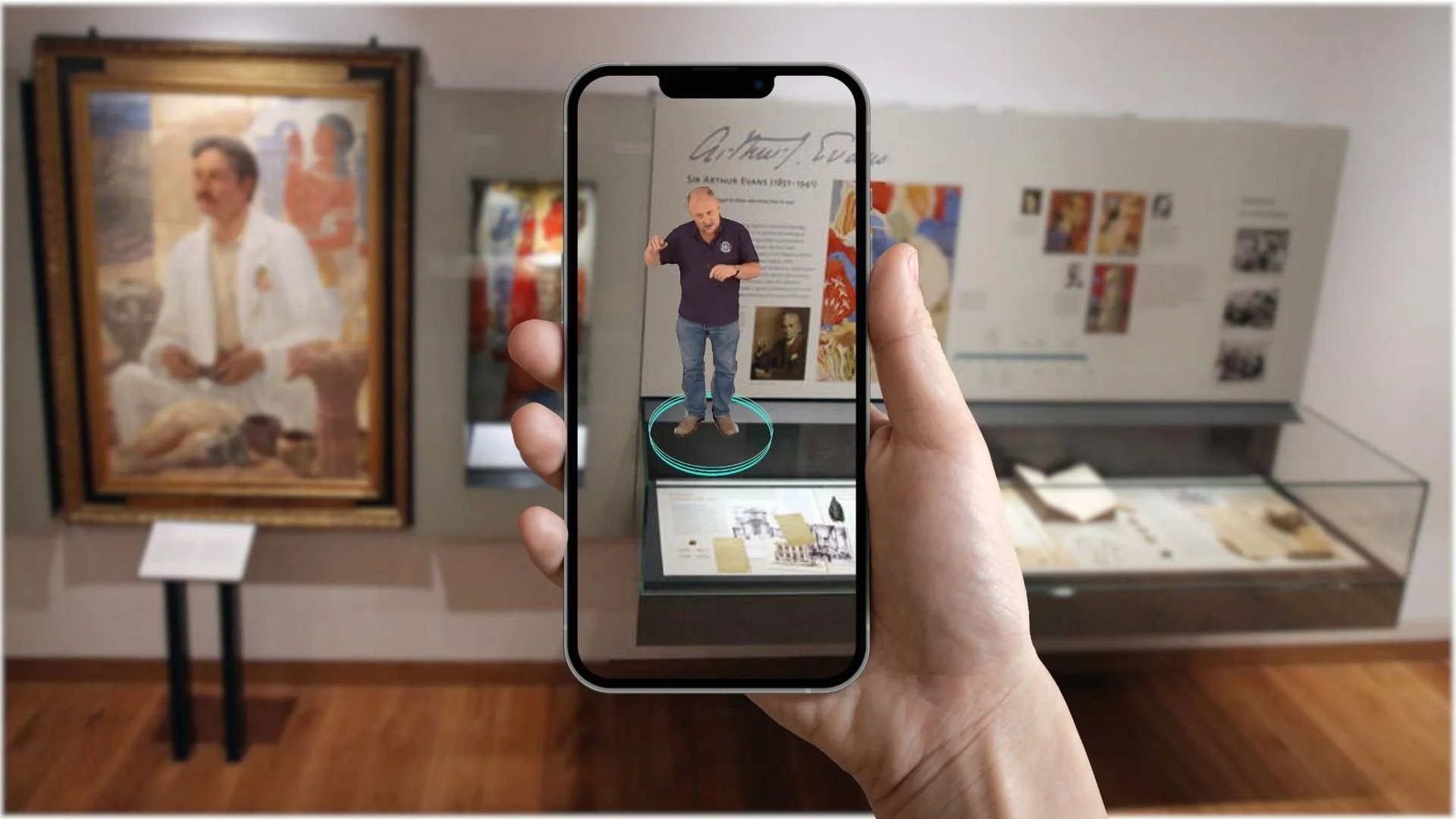
Museums and cultural organisations have always been custodians of memory – gateways to the past, interpreters of the present, and explorers of the future. But today, they are navigating a fast-evolving cultural landscape shaped by shifting audience expectations, funding pressures, and the need for greater inclusivity and engagement.
The Challenges: Relevance, Reach, and Representation
At the heart of the challenge is relevance. In a world saturated with digital content and competing experiences, how can museums continue to matter? Traditional formats, glass cases, text panels, and fixed routes, are fundamental to the experience but can struggle to capture the imagination of audiences raised on interactivity and immersion.
Representation is another pressing issue. Many museums are grappling with how to share histories and perspectives that have been traditionally marginalised, overlooked or excluded. These stories may be too politically sensitive, too contemporary, or simply ‘not in scope’ to integrate into the physical and interpretive fabric of existing exhibitions.
Finally, there is the question of reach. How do institutions connect with people who may never walk through their doors because of geography, socio-economic barriers, or a sense that these spaces are “not for them”?
New Technologies, New Possibilities
Beyond traditional interpretive techniques, this is where layered digital storytelling approaches and technologies like volumetric video and augmented reality (AR) come into play; not as gimmicks or distractions, but as potentially powerful tools for extending storytelling beyond traditional boundaries.
Drawing from Walter Benjamin, (almost) all technologies start as a means of reproducing what already exists – writing and audio recording speech, photography recording places and people, film recording plays. But over time, each of these technologies evolved into an art form in its own right.
Hologram Theatre and Digital Human Performance
Volumetric video allows for the capture of real humans and performances in 4D with sound, creating true to life digital presences that can inhabit both physical or virtual spaces – no CGI or animation.
Combined with AR/XR, which layers digital content onto the real world through mobile devices or headsets, these digital human performances can transform museum spaces – and the world beyond them – into ‘stages’ or immersive storytelling platforms.
Crucially, they offer ways to:
Amplify Underrepresented Voices: Stories that have been historically silenced can be brought vividly to life without needing to alter permanent exhibitions. A visitor can encounter a digital performance of a community member, activist, or historical figure right alongside original artefacts, adding layers of context, meaning and emotional connection.
Reimagine the Museum Space: Rather than changing what’s on the walls or in the cases, institutions can overlay new narratives and perspectives onto existing collections and architecture. AR turns the museum into a living canvas, inviting reinterpretation and new exploration without replacing the ‘power of the real’ that visitors come to these spaces to experience.
Extend Beyond the Walls: With AR, the museum doesn’t have to stop at the museum. Stories can unfold in public spaces, in schools, in homes–meeting audiences where they are and opening up new ways to recontextualise cultural heritage assets and stories in places where they have most relevance and meaning – on the street where it happened, in the place it was found, among the people where this story originated. Cultural heritage becomes ambient, accessible, and alive.
Inspire, Challenge, Delight: Immersive storytelling through AR and volumetric video is not only informative; it’s emotional and engaging. It creates encounters that can surprise and move people, combining heritage and performing/visual art, making intangible cultural heritage tangible in new ways that spark new ways of thinking and feeling about ourselves and the world.
A Tool for Transformation
Not only can these technologies capture a real human performance and place it back into the world (i.e. reproducing), thinking in terms of these technologies can change we plan, produce and deliver these performances from first principles (i.e. a new art form).
These technologies are not an end in themselves. They’re one set of tools among many, and a potential means of deepening the museum’s mission: to educate, to provoke, to include. They can enable institutions to honour the physicality and authenticity of their collections whilst simultaneously surfacing and celebrating different voices and perspectives, and reaching toward the future.
In a time when cultural organisations are being called upon to do more with less, to recognise the complexity of the stories they are telling, and to speak to more people with greater care, AR/XR and volumetric video offer a path forward. Not by replacing what’s already there, but by expanding what’s possible.