
What we believe
These are the ideas that have shaped thirty years of practice. They are not principles we aspire to, they are what we have found to be true, repeatedly, across projects of every scale and kind.
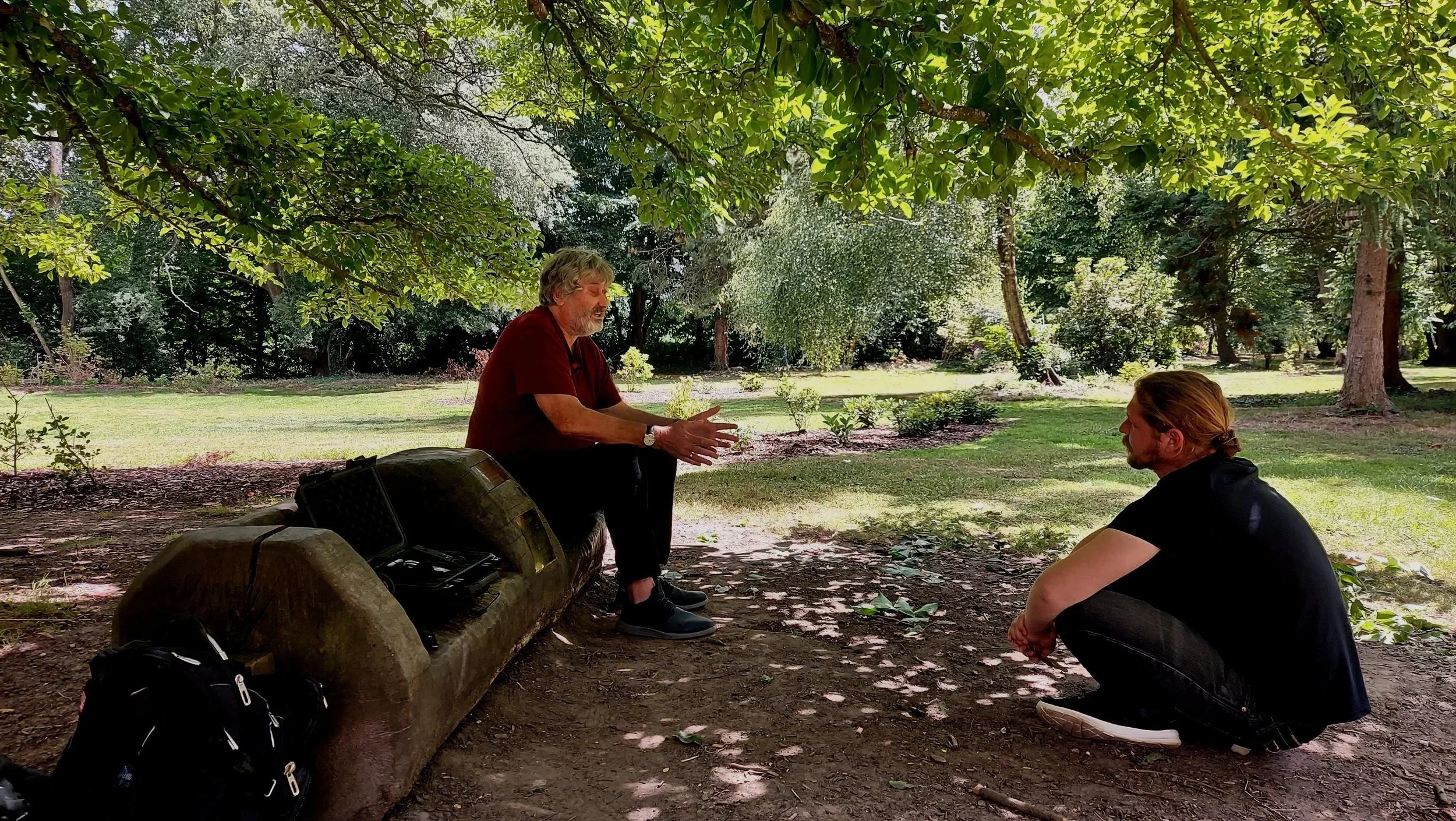
Narrative is both process and product
Most practices treat narrative as something that happens after the real work is done, the words on the wall, the story in the film, the copy in the brochure. We treat it as the work itself.
Narrative Direction is simultaneously the process through which a project finds its direction and the product that results, the written, tested, agreed framework that answers the most important question about every subsequent decision: why? Why this and not that. Why here and not there. Why this voice, this object, this medium, this moment.
When narrative is only a product, it arrives too late to shape anything. When it is only a process, it produces nothing that lasts. The two are inseparable, and keeping them inseparable is what makes the difference between a project that coheres and one that doesn't.
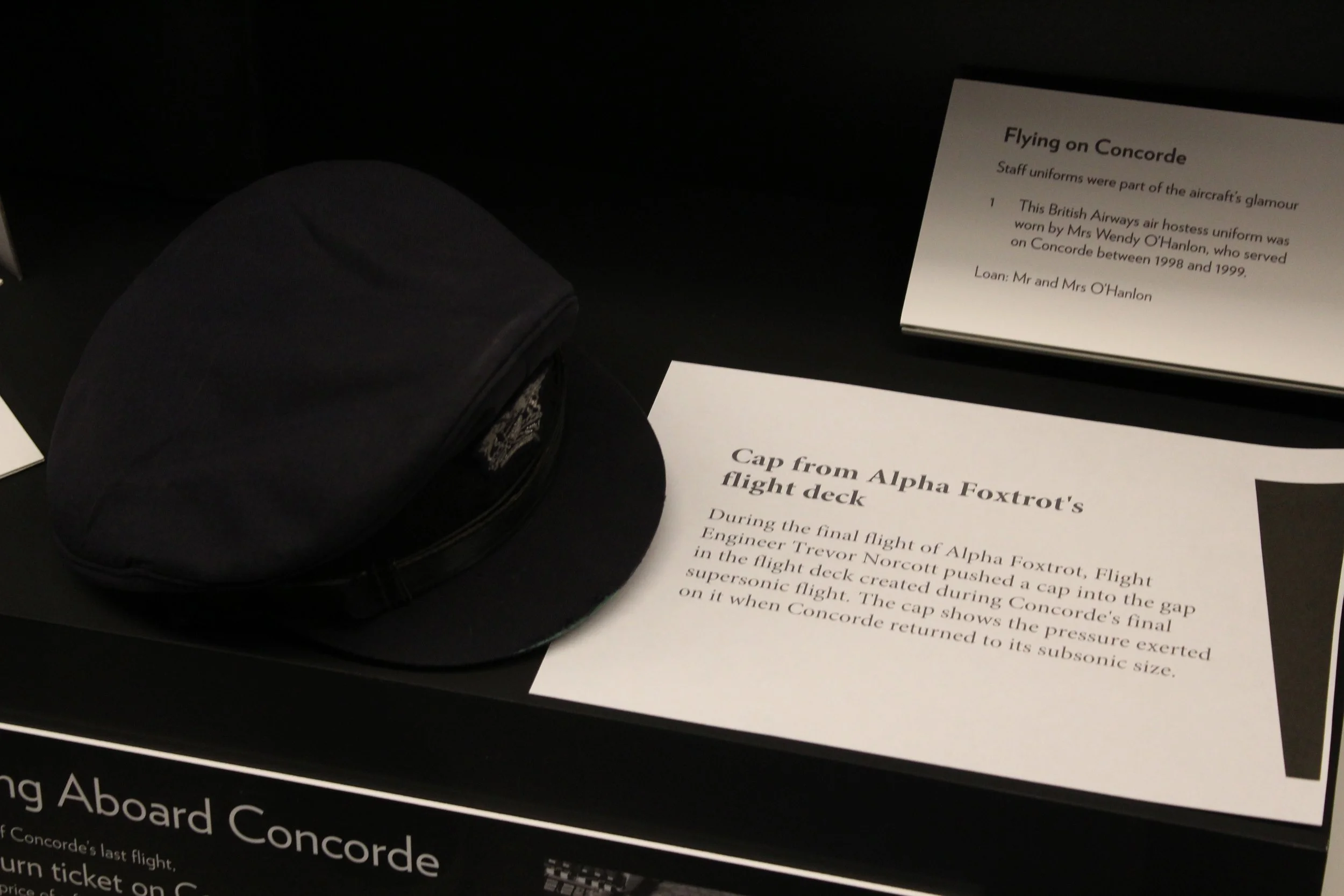
We find threads, we don't invent them
Our clients are the experts in their content. We are not. What we bring is not subject knowledge but the ability to find the pattern, the thread that runs through the material and turns a complex, competing set of themes, stories and objects into a single rationale that everyone working on the project can test their decisions against.
We call this the Golden Thread: the overarching question, statement or framework that becomes the spine of everything else. It is never invented from outside. It is always found inside the client's own material, through structured questioning, deep research and the kind of listening that takes seriously what is said, what is avoided, and what keeps surfacing when nobody is looking for it.
This is why we push back when someone asks us to propose a concept or a metaphor before we have done the work of finding the pattern. A visual metaphor proposed before the narrative is resolved is decoration in search of a story. We start from the other end.
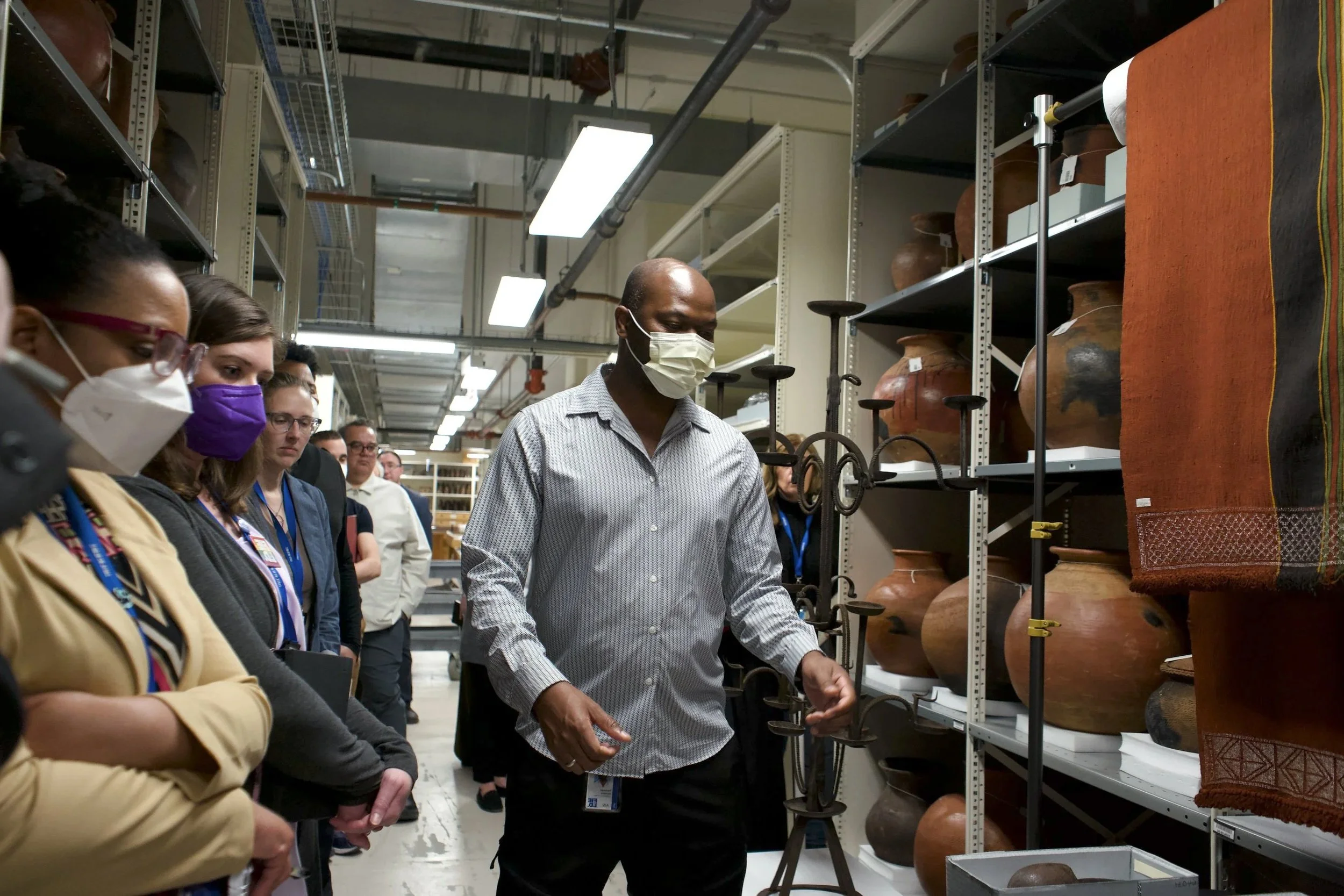
Interpretation comes before design
Design answers what and how. Narrative answers why. These are different disciplines, operating at different stages, and confusing them is the most common and most costly mistake in complex cultural and heritage projects.
Our method is investigative rather than propositional. We ask structured questions until the right framing emerges from the client's own material, not from our aesthetic preferences or our previous projects.
We work with designers we deeply respect, and the best of them know that a narrative framework delivered before the design process begins is not a constraint but a liberation: it tells you what the space is for, which makes every design decision faster, clearer and more defensible.
The narrative is the reason why the design looks the way it does. Without it, design becomes a sequence of individual judgements that nobody can resolve from shared principle, and projects get stuck.
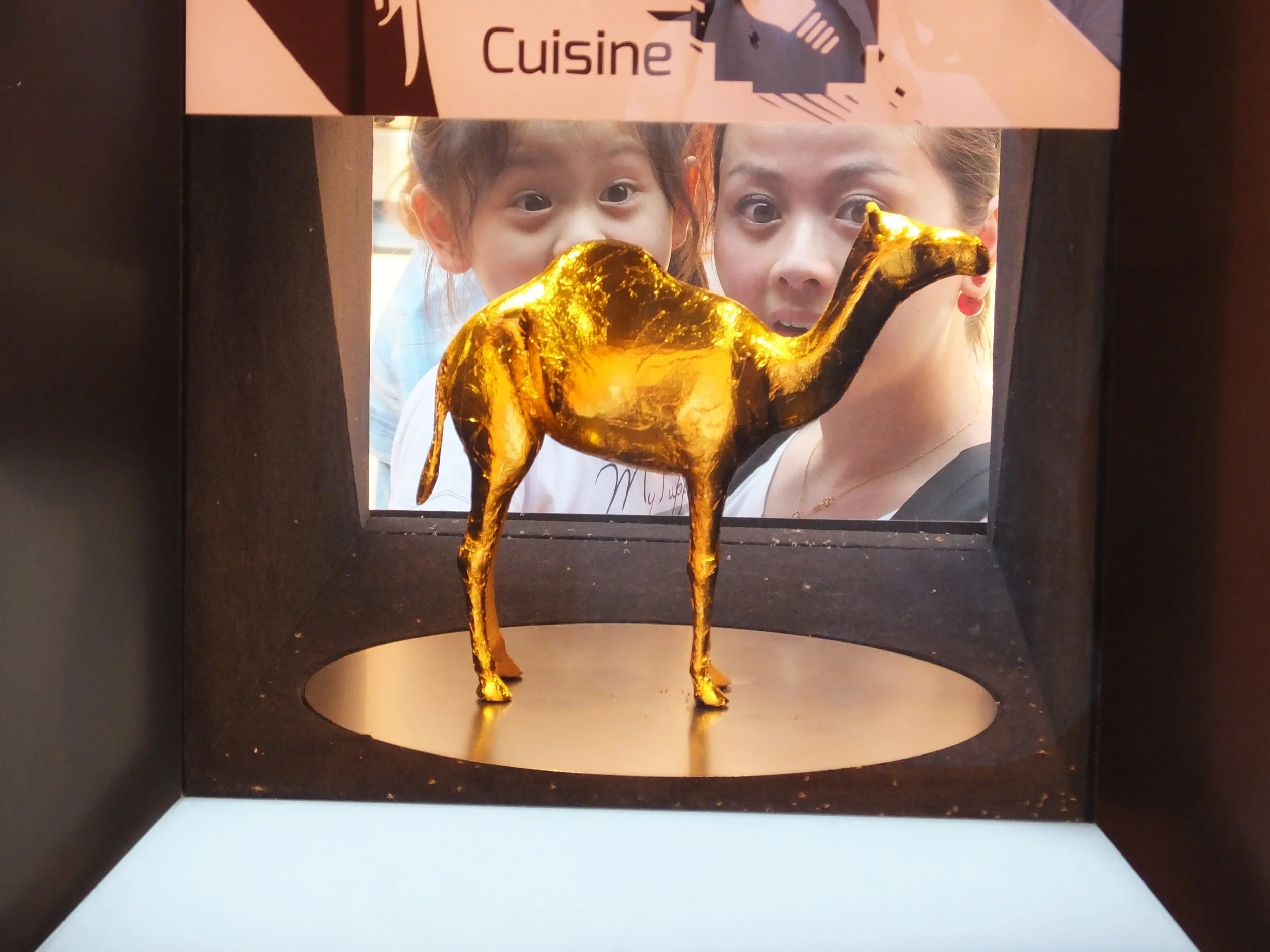
It has to be the client's, not ours
Projects that hand a client a finished answer are the ones that fail. Not immediately, they often look successful at launch. But without ownership, the narrative doesn't survive contact with the next budget cut, the next leadership change, the next disagreement about what the space is really for.
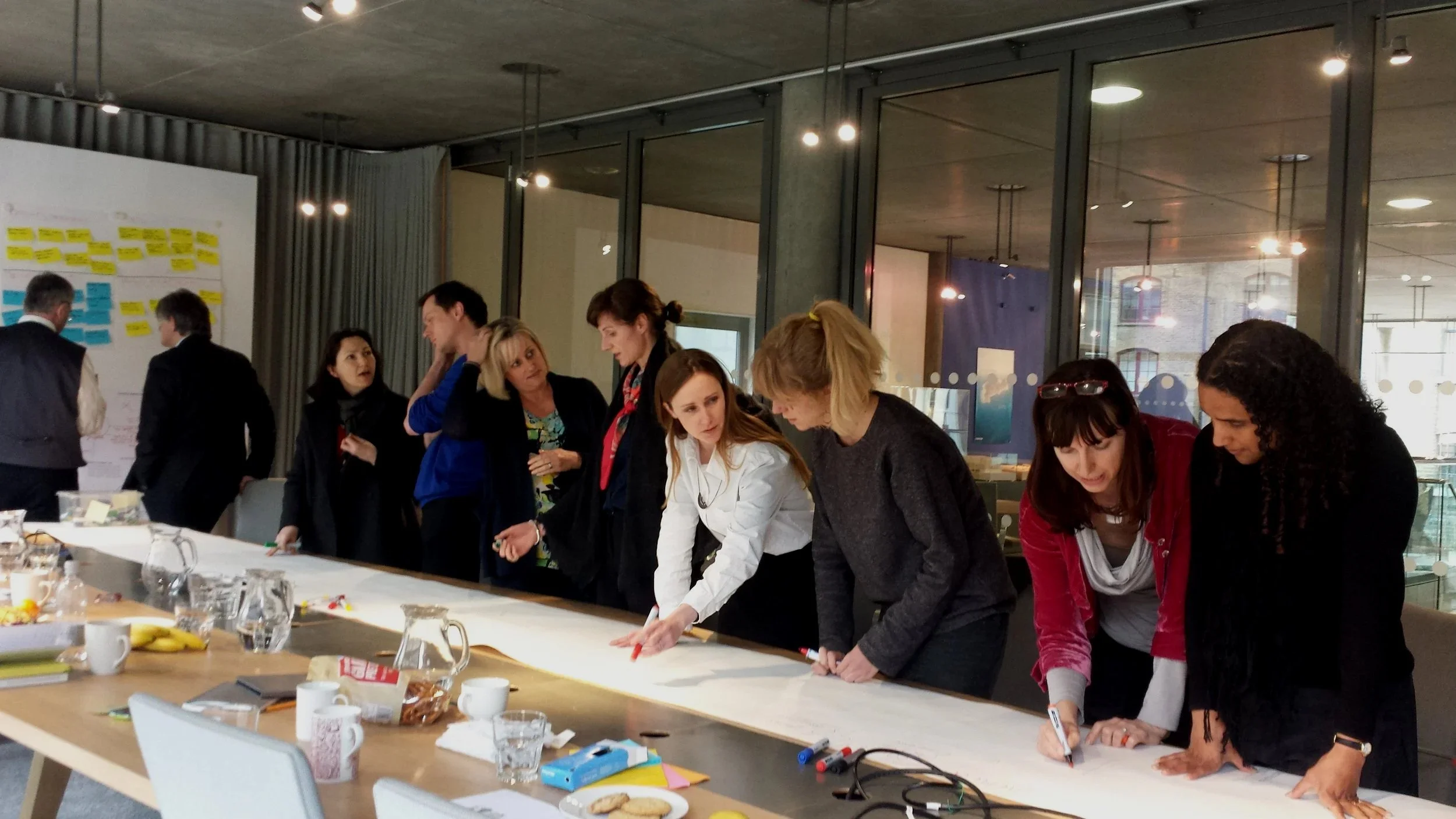
This is why our discovery process is deliberately playful and participatory. Workshops, role play, newspaper-building, imagined visitor journeys, Lego, speed-dating exercises, staged radio plays, not because we enjoy novelty, but because games surface what is truly important more reliably than asking directly. When people play, they stop performing what they think they should say and start revealing what they actually believe. That material is more useful than any survey, and the process of surfacing it creates the ownership that makes an outcome durable.
It is the client's project. Not ours. Our job is to help them find what is already true about it, and give them the language to hold it.
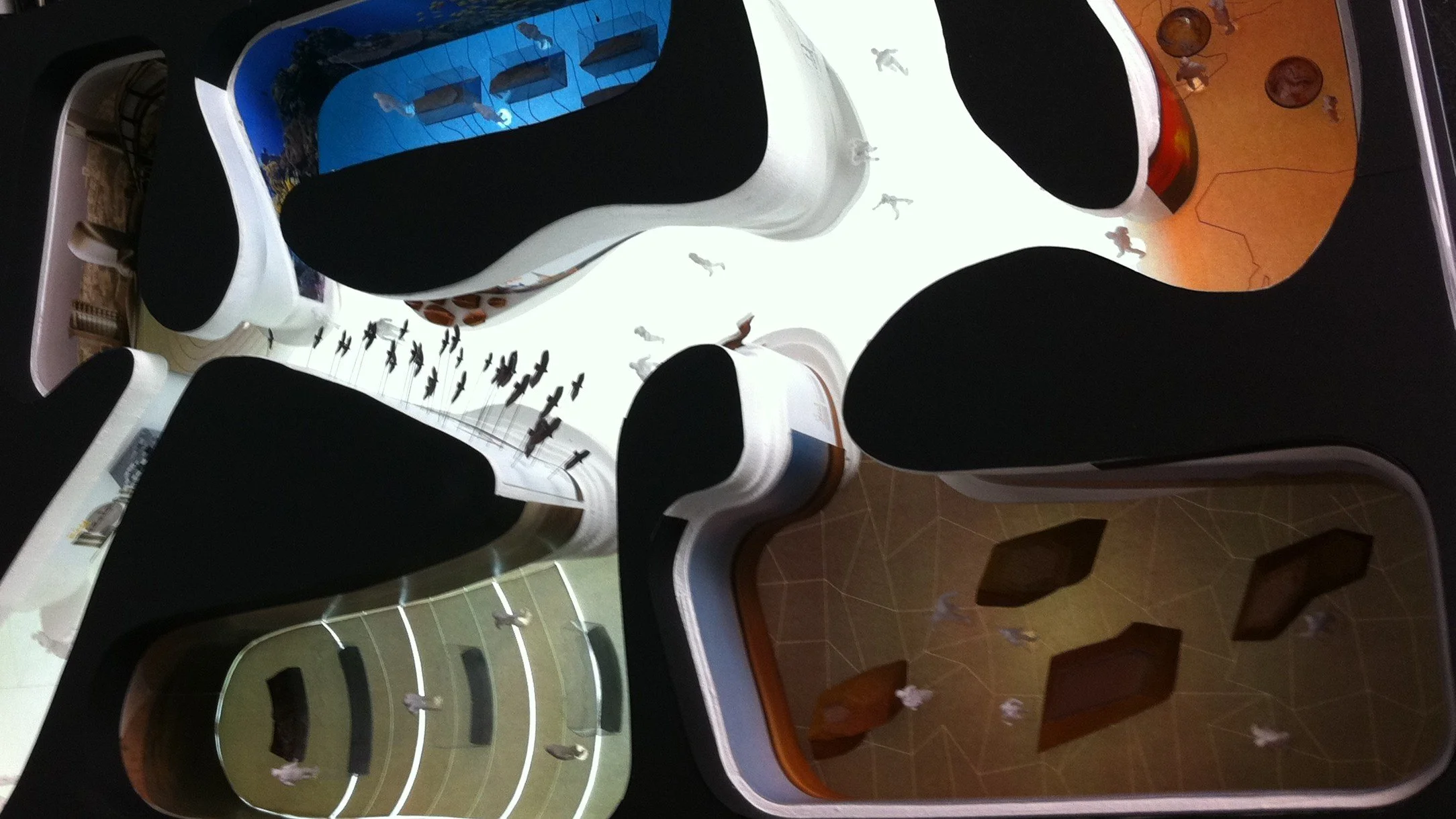
Space and time are narrative media
An exhibition is a live performance. It has to work continuously, for every visitor, regardless of where they enter, how long they stay, what they already know or what they bring with them. The space is not a neutral container for content, it is a narrative medium with its own logic, its own grammar, its own demands.
This is where our background in theatre shapes everything. We think about exhibitions, heritage sites, brand experiences and digital environments the way a director thinks about a stage: in three dimensions, in time, as a sequence of encounters that have to produce a coherent experience for someone moving through them without a script.
The fourth dimension, the communication strategy that holds the whole experience together across every touchpoint, every medium, every moment of encounter, is where most projects lose coherence. It is also where Narrative Direction does its most important work.
The client's own journey is a narrative arc
There is a story inside every commissioning process, the story of an organisation discovering what it is, deciding what it wants to become, and finding the language to take everyone with it. We take that story seriously.
We apply narrative theory to the client's own journey through the project, not just to the experience they are creating. This means writing the client's story back to them, sometimes in competing versions, sometimes staged as a formal presentation in a darkened room, sometimes asking simply: which of these feels like who you are?
The test is always recognition, not design judgement. When the right framing lands, people don't say I like that, they say that's us. That moment of recognition is when the Big Idea stops being our formulation and becomes their conviction. From that point, it functions as a governance tool: a shared identity that resolves future disagreements from principle rather than individual taste.
This is, in its own way, the oldest narrative structure there is. Campbell called it the hero's journey. Every organisation that finds its story and inhabits it has made that journey. We are guides, not authors.