Natural History Museum London
Dinosaur Galleries
The project that started it all and changed the museum narrative of dinosaurs for a generation.
-
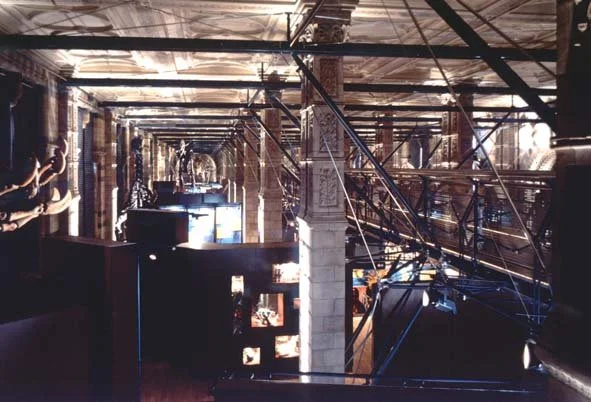
To create a landmark Dinosaur gallery at the Natural History Museum in London that would transform how one of the world's great natural history collections was experienced by the public.
Tim Gardom worked alongside lead architect Ron Herron and design agency Imagination.
Interpretation Planning | Core Narrative Development | Content Development | Exhibit Development
-
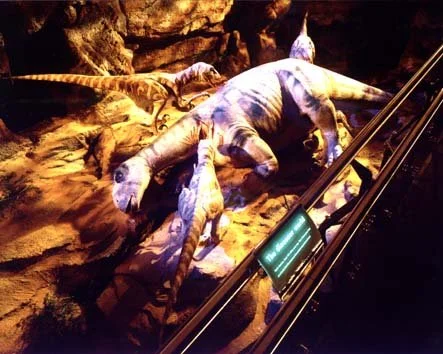
The narrative centred around a single framing question: Were dinosaurs like animals living today?
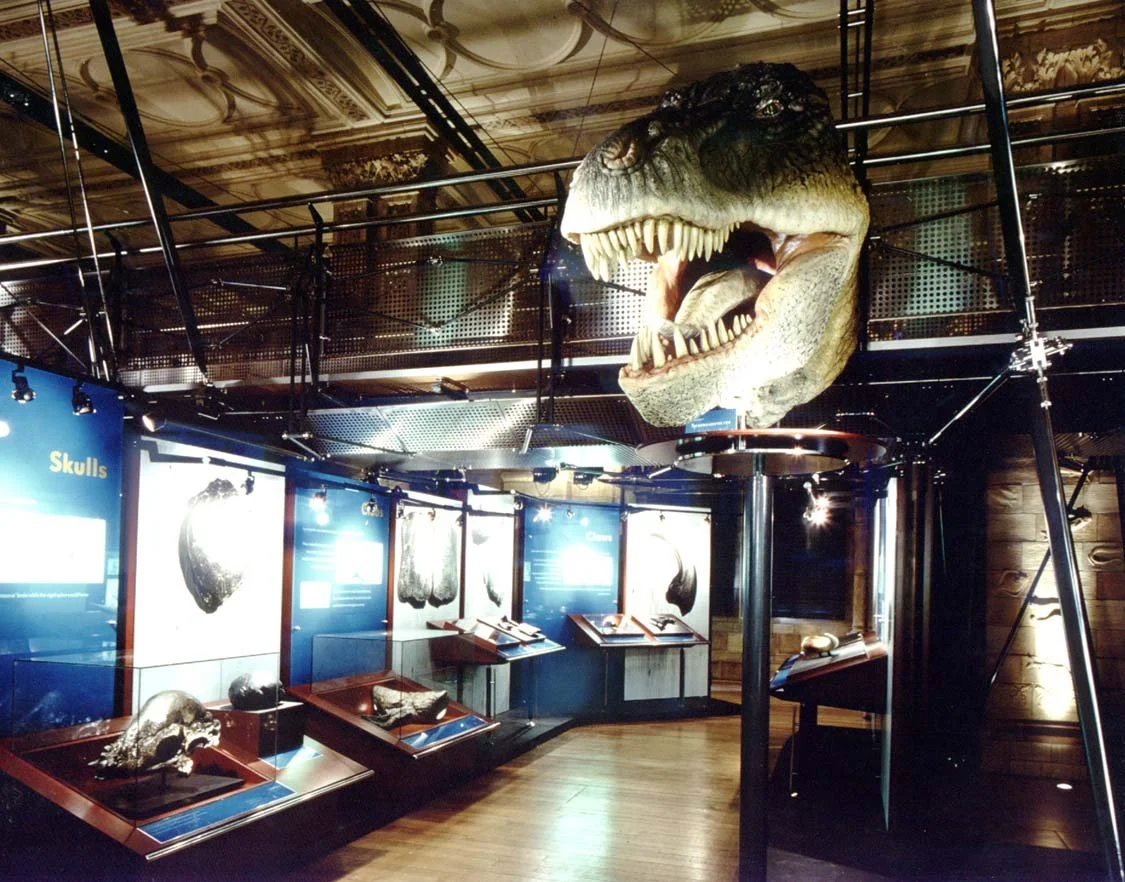
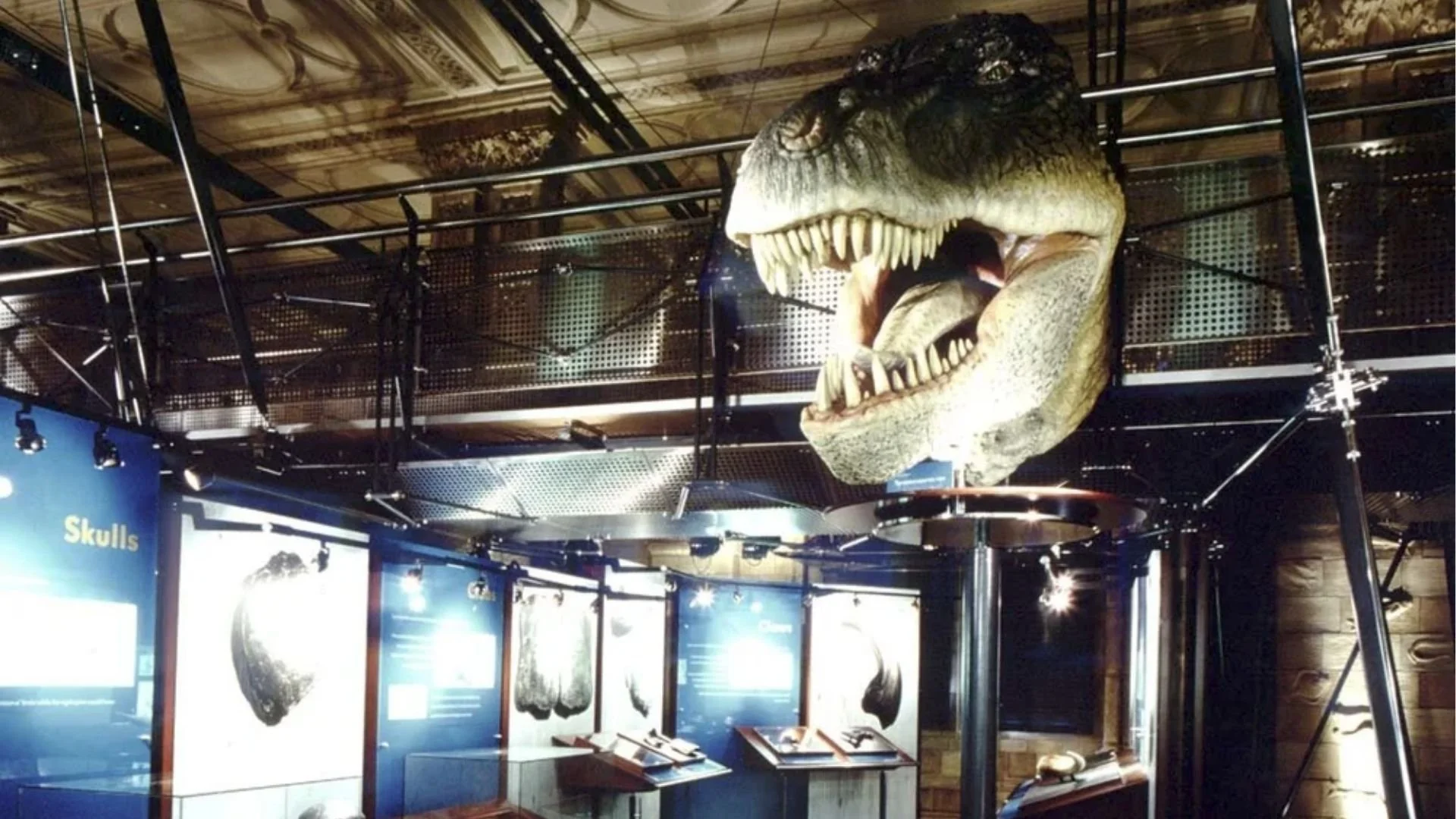
Approaching dinosaurs as living, eating, walking, breeding animals rather than fossil specimens or steps in evolutionary diagrams, unlocked a completely different kind of experience. The best available science and latest research were brought together and expressed through animatronics, accessible writing, graphics and technology that was, at the time, pushing the boundaries of what museum interpretation could do.
The gallery presented foundational specimens, such as the first Iguanodon fossil ever identified, in an entirely new narrative context, not as taxonomic exhibits but as evidence of a living ecosystem.
After thirty years, the gallery remains the Natural History Museum's most visited attraction, seen by over 120 million people since opening.
-
A single well-framed narrative question, asked before anyone starts designing or building, has more impact on the final experience than any subsequent decision. This project proved it, and we have worked from that conviction ever since.
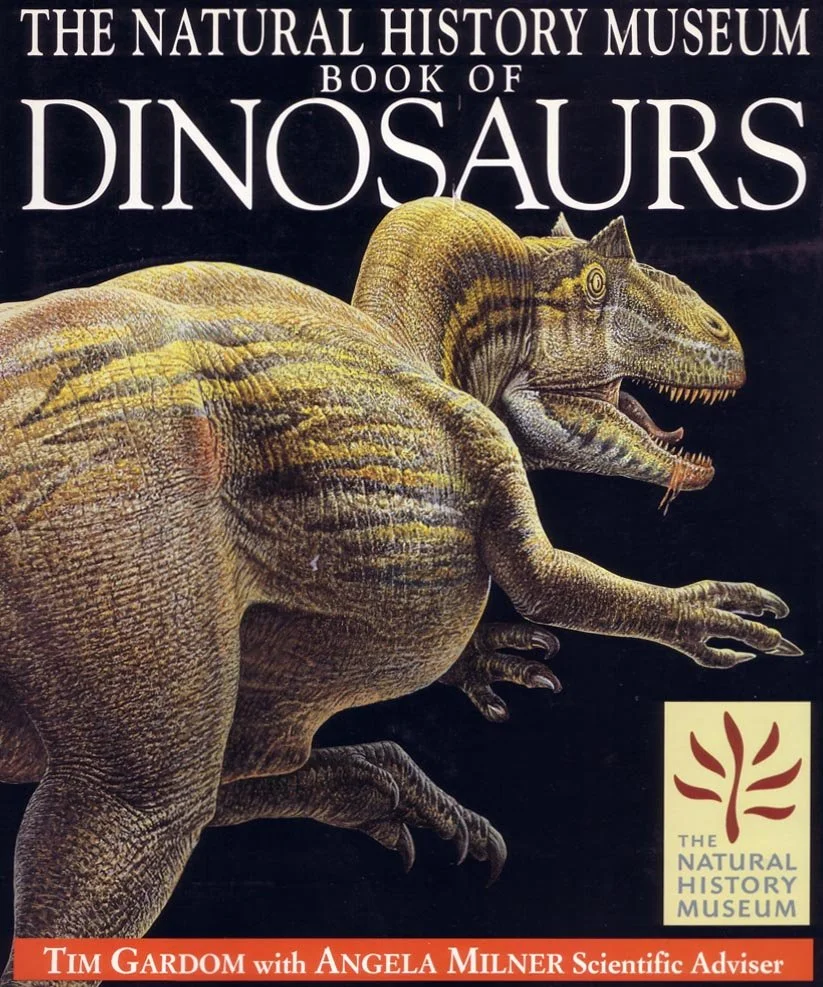
The reach of the narrative extended far beyond the gallery: Tim co-authored the Natural History Museum Book of Dinosaurs, now in its fifth edition and published in over twenty languages.
It is also worth drawing a longer line: from this single reframing of dinosaurs as living animals, through the global explosion of interest that followed, Jurassic Park, Walking with Dinosaurs, Attenborough with Dinosaurs, dedicated YouTube channels, school curricula worldwide, to the point where it is now entirely normal for children to be obsessed with these creatures as a living part of the earth's story rather than bones on shelves.
The right narrative question, asked early enough, doesn't just improve an experience. It can help define how a generation understands the world.
-
Client: Natural History Museum London
Tim Gardom: Interpretation Strategy, Core Narrative Development, Content Development, Exhibit Development, Design Integration
Partners: Ron Herron (Lead Architect), Imagination (Design)